Don't Let AI Be Your "Black Box": Who Is Responsible When Automation Goes Wrong?
In Hong Kong's fast-paced business environment, Artificial Intelligence (AI) is no longer just science fiction but a daily operational assistant for many SME owners. From chatbots that automatically respond to customer inquiries and marketing systems that precisely target ads, to predictive tools that analyze sales data, AI is quietly transforming our work patterns. We enjoy the efficiency and convenience AI brings, but have we considered: when this clever "digital employee" makes a mistake, who exactly should clean up the mess?
This is not an unfounded fear. Many AI systems are like a "black box" to users. We feed data (questions) in, and it gives us an answer (result), but the computation and decision-making process in between is often too complex to understand. When this "black box" fails—for example, a chatbot gives an incorrect quote, a recruitment AI mistakenly filters out excellent candidates, or an automated pricing system tags the wrong price causing major losses—does the excuse "it was the AI's fault, not mine" hold up legally or in front of customers?
The AI "Black Box": The Crisis of Opaque Decision-Making
To understand accountability, we must first understand why AI becomes a "black box." Especially with mainstream Deep Learning models, they learn and identify patterns by analyzing massive datasets. Their internal neural network structures are extremely complex; even the developers themselves may not be able to 100% explain the specific reason behind every decision.
An analogy: it's like hiring a genius intern who consistently produces excellent reports, but when you ask how they reached a conclusion, they only answer "by feel" and "comprehensive analysis." In the short term, they seem powerful, but long-term, would you dare to entrust your company's most critical decisions entirely to them without any oversight mechanism? AI is this genius intern whose thought process you cannot see through.
When potential risks turn into actual losses, problems arise. Here are a few real-world scenarios Hong Kong SMEs might encounter:
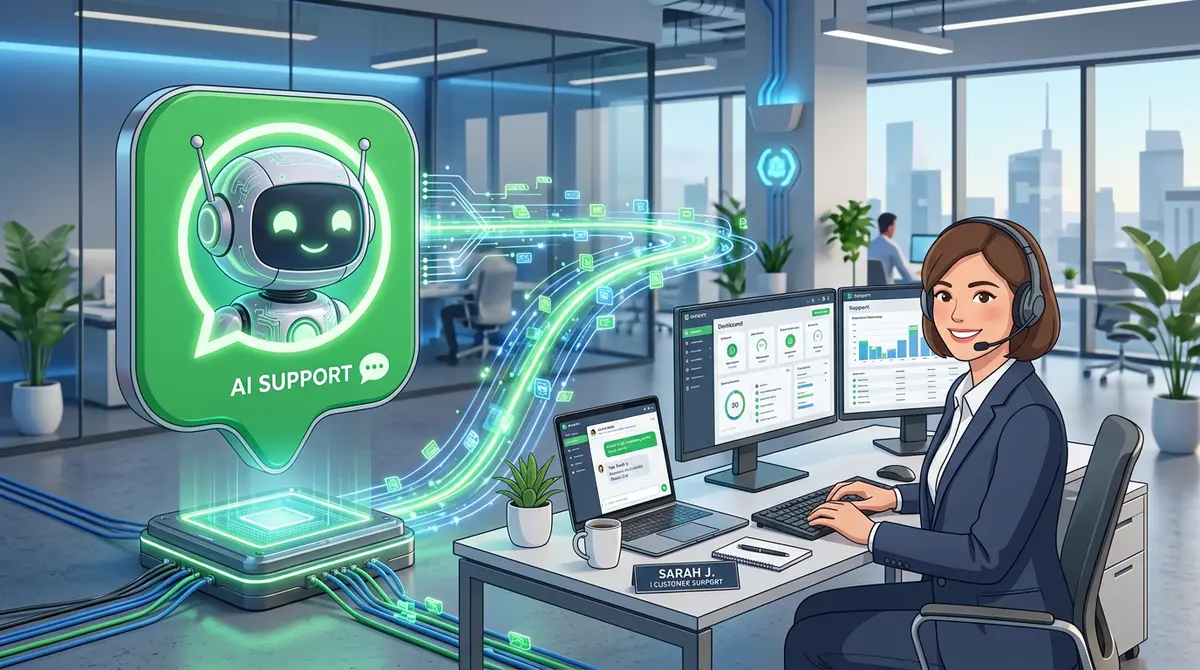
- Customer Service Disaster: Your company's AI Chatbot misinterprets customer terms and promises a discount the company simply cannot offer. The customer demands fulfillment with a screenshot of the conversation as proof. Do you comply? If not, you risk customer complaints or even lawsuits; if you do, you must absorb the loss.
- Recruitment Discrimination Trap: To increase efficiency, you use an AI system to screen resumes. However, due to inherent bias in the training data (e.g., historically hiring more graduates from certain universities), the AI automatically filters out excellent candidates from other institutions. You not only miss talent but could also unwittingly violate equal opportunity ordinances.
- Marketing & PR Crisis: Your AI marketing tool automatically pushes personalized ads based on user data. Unexpectedly, the system malfunctions, sending a highly inappropriate ad to a sensitive customer group. The ad goes viral on social media, destroying your company's hard-earned brand image overnight.
- Inventory Management Error: The AI forecasting system incorrectly predicts market demand, suggesting you stock up heavily. Market trends then shift, leading to overstock and immediate cash flow strain.
In these situations, the excuse "the AI did it" seems weak. Customers, the public, and even the courts will ultimately look at your company's logo, and the party held accountable will be you—the business owner.
The Accountability Maze: Who Ultimately Pays the Bill?
When AI fails, accountability resembles a maze involving multiple parties with blurry boundaries.
***Business User (You):**
As the party ultimately adopting the AI tool, the business typically bears primary responsibility for the consequences of its commercial activities. Whether financial loss or reputational damage, you are the first in line to "foot the bill." Hong Kong's current legal framework, such as the *Supply of Services Ordinance* or the *Misrepresentation Ordinance*, primarily regulates commercial conduct between people. AI, as a tool, is likely viewed as an extension of the company's actions. Simply put, you cannot simply "outsource" responsibility to an algorithm.
***AI Supplier/Developer:**
How much responsibility do they bear? The key lies in the service contract (SLA) you sign with them. Most suppliers include disclaimers in their terms, limiting their liability for indirect losses caused by AI system errors. They may promise system uptime but rarely guarantee the "quality" or "accuracy" of AI decisions. Therefore, carefully reviewing contract terms before procurement is your first step in self-protection.
***Data Provider:**
The performance of AI is closely tied to the quality of the data used to train it. If AI makes an error due to biased or inaccurate third-party data, how is responsibility assigned? This issue is even more complex, often mired in an endless chain of blame.
***Legal and Regulatory Vacuum:**
Currently, globally and in Hong Kong, specialized laws addressing AI accountability are still in their infancy. When incidents occur, existing legal frameworks must be applied for interpretation, often leading to grey areas. This legal uncertainty is, in itself, a significant risk for SMEs.
Demystifying the "Black Box": Self-Protection Strategies for SMEs
Faced with this accountability maze, should SMEs avoid AI altogether? Of course not. The competitive advantage AI development brings is undeniable. The key isn't to avoid using it, but to use it "smartly." Below are core strategies curated by Frasertec Limited to help you turn the AI "black box" into a more controllable "glass box":
1 Choose Your AI Partner Carefully, Conduct Due Diligence
Don't just look at price. When selecting an AI service provider, you need to be as rigorous as hiring a core employee. Proactively ask them the following questions:
- ***Transparency**: How transparent is your AI model's decision-making process? Can you provide some level of explanation?
- ***Error Correction Mechanism**: When the system errs, do you have established procedures and technical support?
- ***Liability Clauses**: What are the clauses regarding data privacy, intellectual property, and liability caps in the contract?
- ***Case Studies**: Do you have client case studies from similar industries we can reference?
2 Establish a "Human-in-the-Loop" Oversight Mechanism
For critical business decisions, never let AI drive 100% autonomously. You must establish a "human-in-the-loop" oversight mechanism.
- ***Recruitment**: AI can be used for initial screening, but final interviews and hiring decisions must be made by humans.
- ***Quoting**: "For significant business decisions, never let AI operate 100% autonomously."
- ***Customer Communication**: For complex or money-related inquiries, the AI chatbot should escalate to a human customer service agent. This extra step is your company's most important safety net.
3 Develop Clear Internal AI Governance Policies
Don't assume buying an AI tool is a one-and-done solution. You need to establish a clear governance framework within your company:
- ***Appoint a Responsible Person**: Clearly designate which colleague or department oversees the daily operation and performance of AI systems.
- ***Contingency Plan**: Develop a Standard Operating Procedure (SOP) for when AI fails, including how to halt the system, correct errors, and communicate with affected customers.
- ***Staff Training**: Ensure employees using AI tools understand their functions, limitations, and potential risks.
4 Demand "Explainable AI" (XAI)
While not all AI models can fully explain themselves, "explainability" has become a major trend in AI development. When procuring, prioritize AI products that provide a certain level of decision rationale. For example, if a credit approval AI gives a "rejection" result but also indicates it's due to reasons like "applicant's debt-to-income ratio is too high" or "poor credit history," it significantly increases decision transparency and reliability.
5 Conduct Regular Audits and Monitoring
AI models are not static. As new data is fed in, their behavior can "drift" (Model Drift), meaning performance gradually degrades or new biases emerge. Therefore, you need to regularly audit your AI system's performance, checking if its decisions still align with your business goals and ethical standards. Learn more about model degradation risks in our detailed guide.
Conclusion: Be the Master of AI, Not Its Slave
The wave of AI automation is unstoppable. For resource-limited yet innovation-driven Hong Kong SMEs, it is a powerful double-edged sword. Used well, it can help you break through in fierce competition; but ignoring its "black box" nature and the underlying accountability issues can lead to unexpected operational disasters.
Ultimately, the starting and ending point of responsibility lies with you—the business decision-maker. Rather than wondering who's to blame after something goes wrong, start today by adopting proactive strategies, integrating risk management into your AI application blueprint. Choosing a reliable, professional IT partner to guide you through every step of AI introduction, deployment, and governance is key to standing firm in this intelligent era.
Frasertec Limited has extensive experience dedicated to helping Hong Kong SMEs safely and effectively apply the latest technology. If you are considering introducing AI or have concerns about your existing automation systems, our expert team is ready to provide professional consultation and co-create a clear, controllable AI strategy that delivers real value for you.
Contact Frasertec Limited Now
Explore our comprehensive AI and technology services.