Frasertec AI Bootcamp Chronicles (6): Integrating Practical Highlights to Fully Empower Future Services
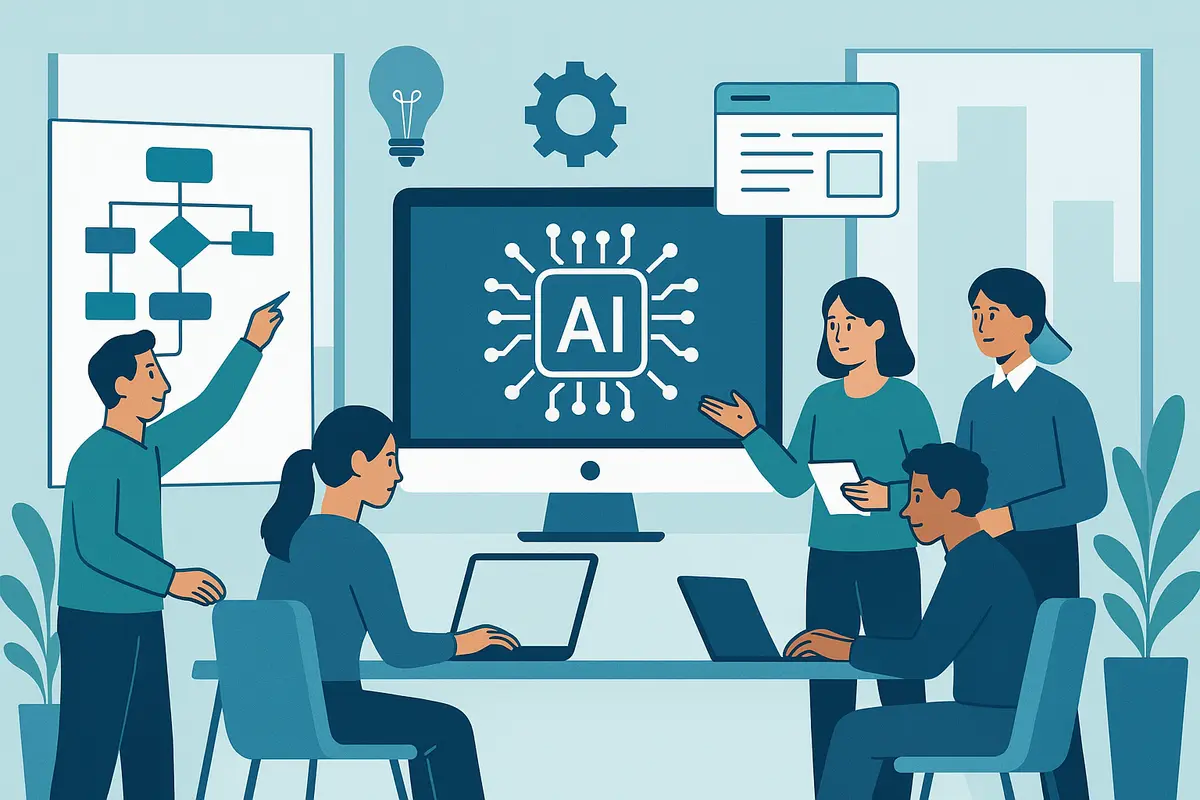
As the six-day AI Bootcamp came to a successful conclusion, the office whiteboard became the most faithful witness to our exploratory journey. Instead of lines of code, it displayed a core system flowchart, densely populated with branching "nodes" and annotations extending outward from the main framework.
The most surprising revelation was that some key nodes on the diagram were not crafted by our team. They were solutions automatically generated and proposed by AI during collaboration—more elegant and efficient than our original plans. This was an unexpected "aha moment"—AI is not just an executor; it can now serve as an "intelligent advisor" at the architectural level.
All these discoveries and detailed notes have been systematically organized in shared cloud documents. This scene perfectly encapsulates our greatest takeaway: what we gained was far more than successful code. More importantly, we solidified a pressure-tested, replicable, and reliable AI collaboration methodology for the company.
Four Core Pillars for Successfully Leveraging AI in Enterprise Software Development
- Standardized "Communication Language": Establishing clear, structured instructions and rules is an absolute prerequisite for ensuring AI outputs high-quality, consistent code.
- "Architecture-First" Macro Blueprint: Before writing code, senior engineers design the system's top-level architecture to ensure all AI-generated components integrate seamlessly, avoiding later chaos and refactoring.
- "Orchestra Conductor" Approach to Multi-Tool Collaboration: Acknowledge that no AI is omnipotent. Learn to assign the most suitable tools for different tasks, using a combined strategy to tackle complex challenges.
- Human Expert "Final Review" Quality Commitment: AI is an accelerator but never replaces professional judgment. All AI-generated code must undergo rigorous review and optimization by senior engineers to ensure the final product's security, stability, and卓越 performance.
An "Imperfect" Yet More Successful Exploration
To be honest, was this Bootcamp 100% successful? From a time-management perspective, no. We originally planned for six days but ultimately exceeded the expected timeframe.
Why? Because during the exploration, we uncovered far more potential, encountered more challenges, and sparked more innovative ideas—like "AI-optimized process nodes"—than we initially anticipated. The team unanimously agreed: rather than rushing to finish, it was worth investing extra time to thoroughly study these unexpected discoveries. This wasn’t a delay; it was a valuable "deep dive" with rewards far exceeding expectations.
Conclusion: Merging Experience with Innovation to Empower Your Business Future
These four pillars, along with the invaluable lessons learned from the "extended timeline," are now fully integrated into the core processes and quality assurance system of our AI Rapid Development Service.
Frasertec Limited will deeply integrate AI’s disruptive efficiency with our team’s over two decades of professional development experience across industries. This means we can offer Hong Kong SMEs an unprecedented solution: combining the agility and cost-efficiency of AI with the robustness and reliability of traditional professional development.
This Bootcamp is not an endpoint but a brand-new starting point. It marks another solid step forward for Frasertec in embracing new technologies and empowering clients’ digital transformation. We will continue deepening the application and research of AI technology, elevating our overall service capabilities, and partnering with clients to co-create a smart technology-driven business future.
Want to learn more about our AI development services?
Contact our expert team via WhatsApp now:
WhatsApp 852 25788828